Fleet Space leads consortium to demonstrate SENTRI: Connecting sensors to decision-makers via Australian satellites.
From defence and emergency response to biosecurity and critical infrastructure, decision-makers often need to know what is happening in remote, disconnected locations. SENTRI, a South Australian project led by Fleet Space Technologies and funded by the Defence Innovation Partnership’s Activator Fund, has shown that widely distributed sensors can bridge that gap, connecting directly to Australian satellites to turn detections into decision-ready insights.
Connecting sensors to satellites
for decision-ready insights.
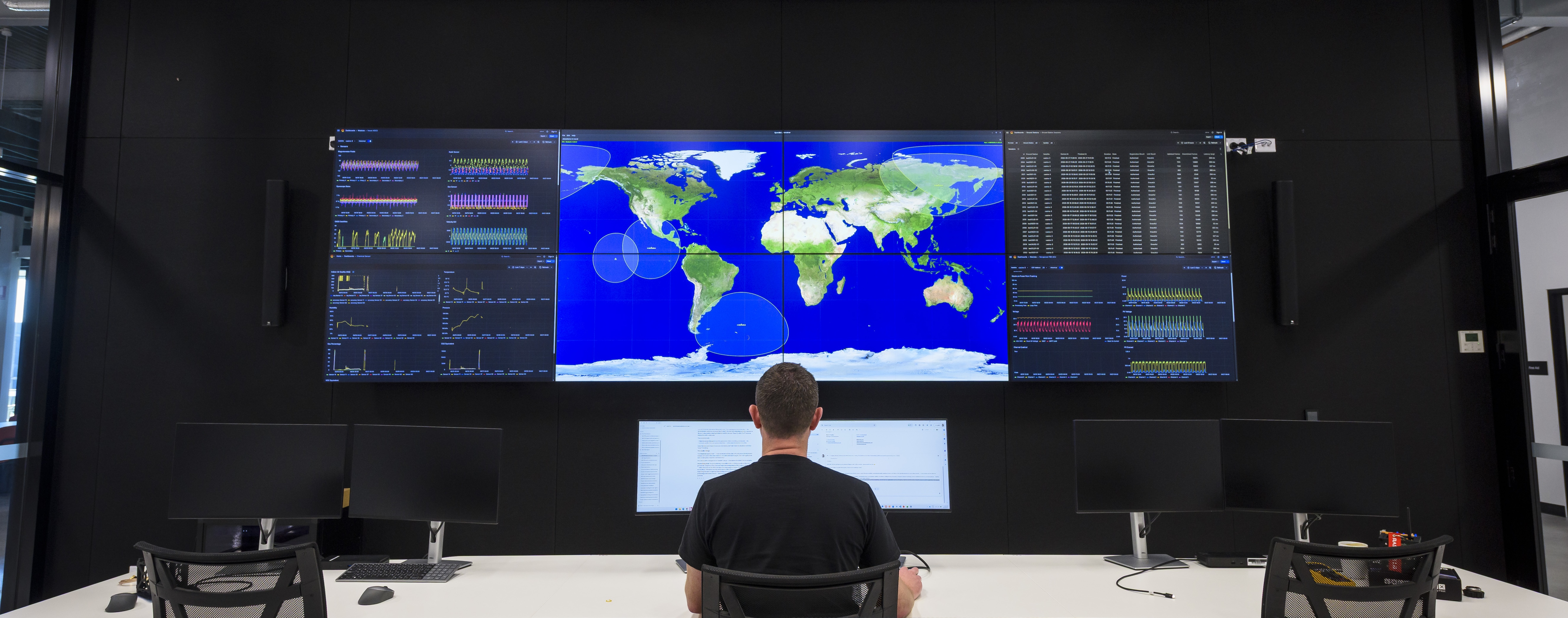
On 23 September, at Fleet’s global headquarters in Adelaide, Fleet and its consortium partners presented the full end-to-end SENTRI architecture, run over a live satellite link. Sensor nodes detected and analysed a simulated hazard, delivering the results to the Defence Science and Technology Group’s (DSTG) cloud-based OCHRE platform.
“We’ve shown that small, low-cost sensors can report straight to an Australian satellite and put a live picture in front of a decision-maker within seconds. That opens up sensing in remote and disconnected environments, at scale, supporting timely decisions,” said Matt Pearson, Co-founder and Chief Exploration Officer, Fleet Space Technologies.

A flexible foundation
for different missions
SENTRI is a technology foundation, bringing together commercial sensors, edge intelligence, an Australian-developed waveform, Fleet’s satellites and DSTG’s OCHRE platform, and is designed to carry whichever sensor a mission requires.
“We built a network that can carry whatever sensor the job needs. The sensor changes to suit the mission; the satellite link, the intelligence and the operating picture stay the same,” said Mr Pearson.
Dual-use capability across
defence and civil needs
The same capability serves civil needs, including emergency management, biosecurity and critical infrastructure monitoring, where networks are often absent or the first thing to fail.
“SENTRI runs over the same Australian satellites that support our commercial operations, a clear example of dual-use space infrastructure in action,” Mr Pearson said.
Fleet builds and tests its satellites in South Australia. Its global headquarters at Adelaide Airport, a more than 5,300 m² advanced manufacturing facility, has the capacity to produce hundreds of satellites a year. It is where Fleet built and tested its latest satellite, Centauri-9, which launched in July 2026.

A South Australian consortium,
with field trials ahead
The project was led by Fleet Space Technologies with Safety From Space, the Australasian Space Innovation Institute, Insight Via Artificial Intelligence, Swordfish Computing, Adelaide University and DSTG, with $1.6 million in funding from the South Australian Government through the Defence Innovation Partnership.
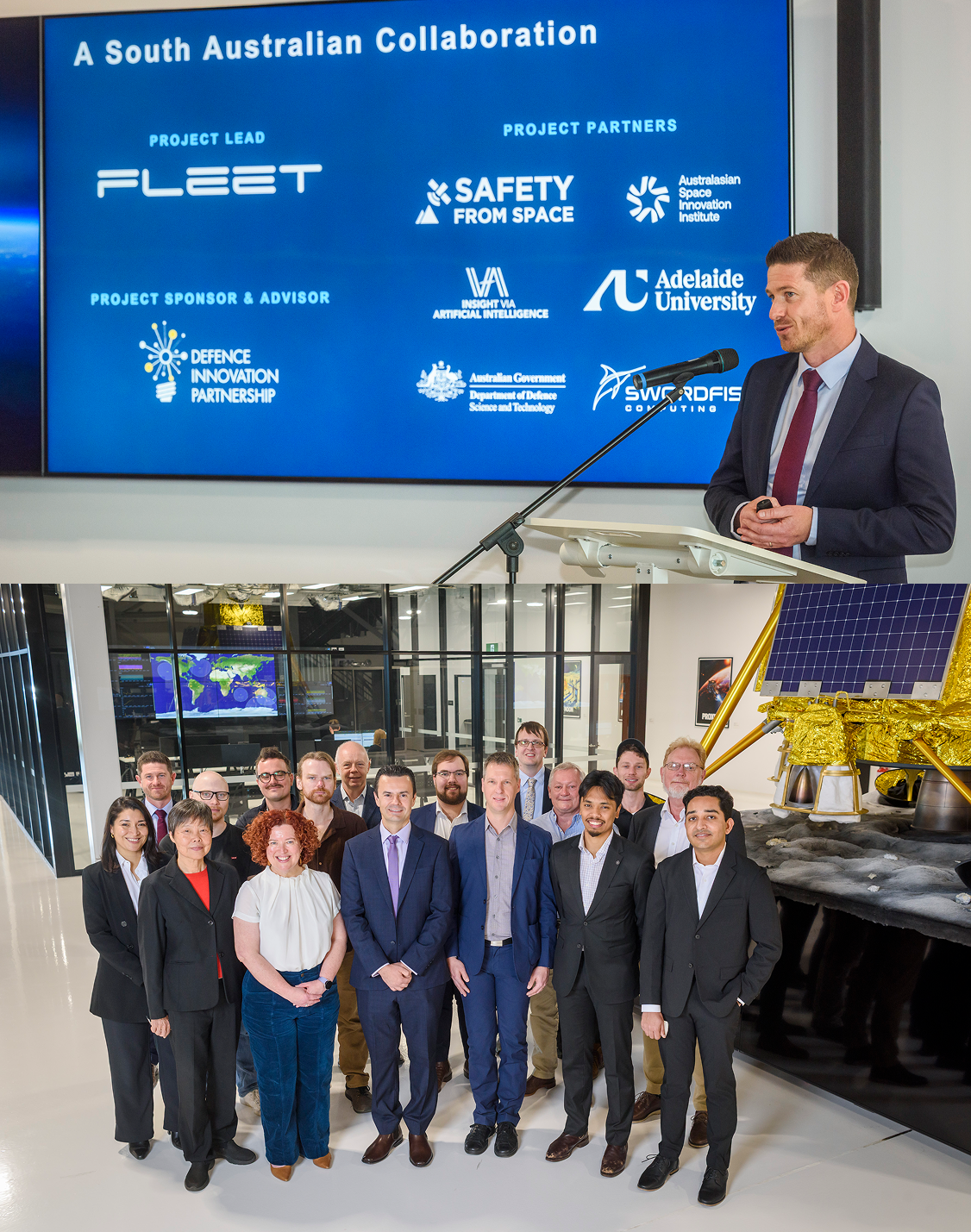
The consortium is now seeking partners for an operationally representative field trial.
A project summary and a link to register interest are available at fleetspace.com/sentri.
You might also like