Seismic-led Intelligence
The structural foundation for
confident decisions
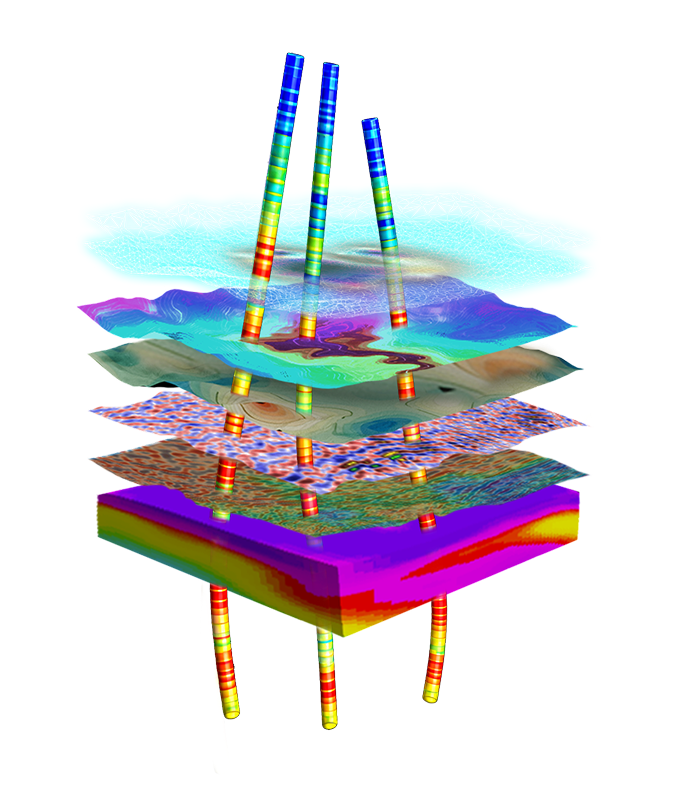
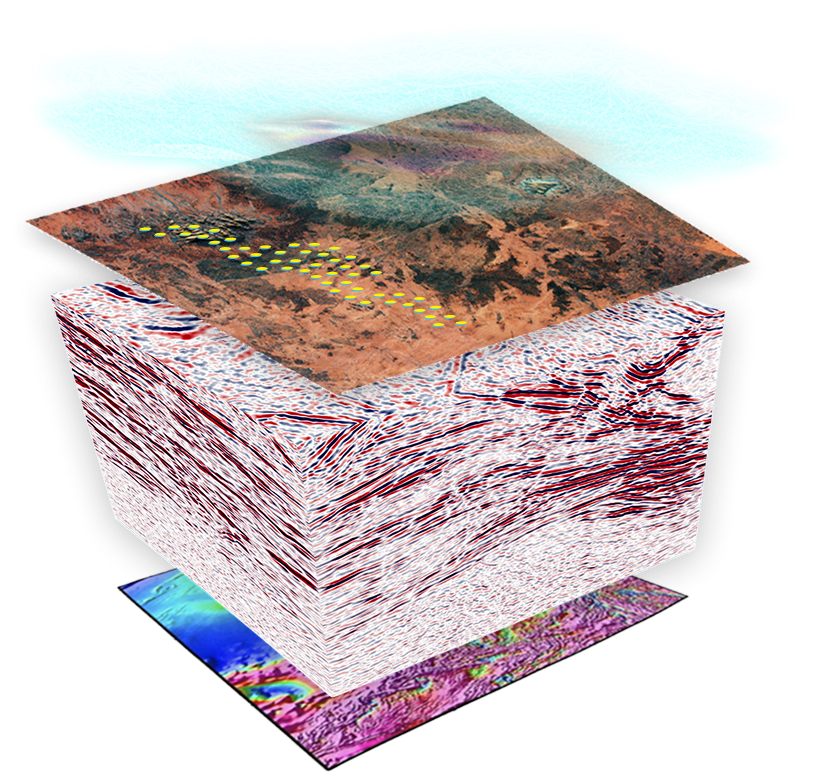
Fleet combines seismic with geology, drilling, geophysics, geochemistry and machine learning to extract maximum value from the data you already own.
We build a deeper, more confident understanding of the subsurface.


The Seismic Shift
“Without a 3D structural model, pattern recognition finds correlations. With one, it produces ranked targets your team can defend and drill.”
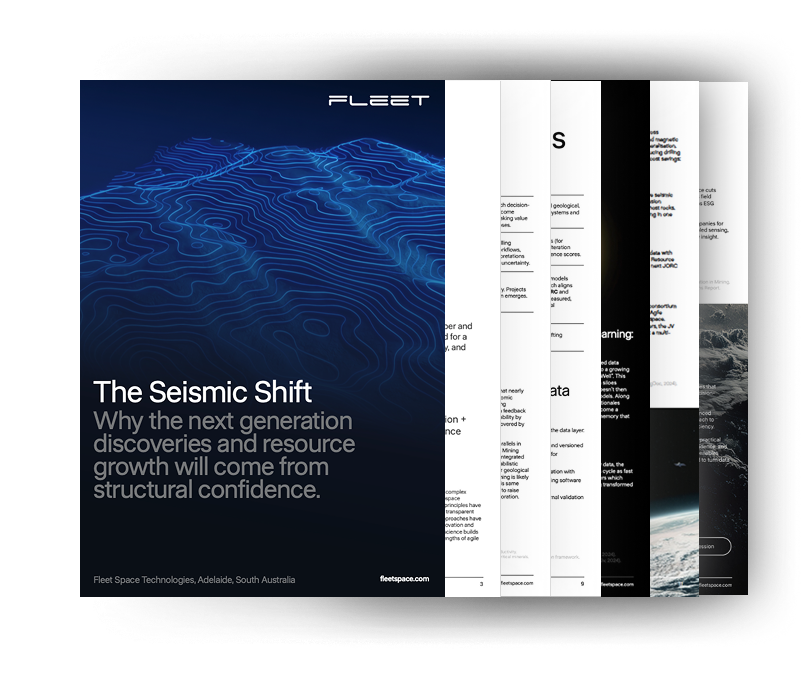
Decision Partner
From project generation through to resource development, Fleet helps geoscience teams decide where to focus, where uncertainty remains, what to drill, and where the next dollar or metre should go.
Seismic-led does not mean seismic-only
Seismic makes the rest of your data more valuable.
Most seismic is processed and delivered as a standalone geophysical product. Fleet works differently.
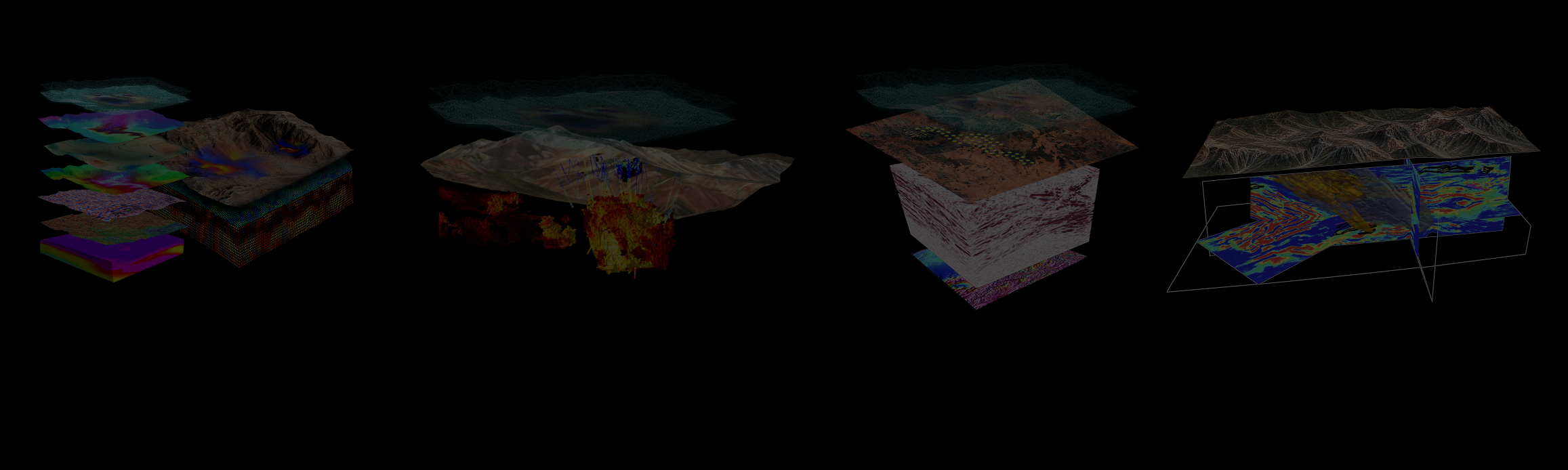
We bring seismic into the context of the project’s geology, drilling, geophysics, geochemistry and mineralogy, reconciling them within the same 3D structural framework. This allows velocity and reflectivity to be interpreted against what is already known about the rock and ground truth, while existing datasets gain the depth and structural context they often lack on their own.
The result is not another dataset. It is a more complete geological interpretation of the subsurface.
Seismic
Constrains subsurface architecture, including faults, contacts, lithological domains, depth and continuity.
Magnetotellurics
Maps resistivity and conductive features associated with alteration, fluid pathways and conductive mineral assemblages.
Gravity
Measures density contrasts associated with
changes in lithology, intrusions and dense mineral assemblages.
Magnetics
Maps variations in magnetic mineralogy, supporting interpretation of lithology, intrusions and alteration.
Geology
Provides the geological observations and
interpretation needed to understand the system.
Geochemistry + mineralogy
Adds compositional evidence around alteration, lithology and mineral-system architecture.
Drillhole data + ground truth
Tests the model against the rock itself, using drilling, assays and core observations to validate and refine the interpretation.
Machine learning
Evaluates relationships across the combined evidence to rank targets, test predictions and quantify uncertainty.
Why Seismic?
At depth,
3D geometry matters.
As exploration moves deeper and beneath cover, many conventional methods still detect a response, but resolving exactly where it sits, how deep it is and how it connects to the ‘big picture’ becomes harder.
Seismic adds that missing geometry. It measures how seismic energy moves through and reflects from the rock, allowing faults, contacts, lithological boundaries and structural continuity to be resolved in three dimensions.
That structural constraint reduces the number of geological interpretations that remain plausible before drilling begins.
Resolve structure at
depth and under cover
Move beyond plan-view anomalies to understand geometry, orientation and continuity in 3D. Image geological architecture where surface mapping and geochemistry provide limited information.
Constrain competing
interpretations
Use seismic velocity and reflectivity as additional physical-property evidence when other geophysical responses remain non-unique.
Improve drill
targeting
Position drilling against specific geological and structural hypotheses rather than asking the drill bit to establish the geometry.
Extend understanding
between and beyond holes
Constrain faults, contacts and structural continuity between and beyond discrete drillholes, where drilling alone leaves interpretation gaps.
Passive Seismic
Ambient Noise Tomography
Build the 3D structural framework at
depth and scale
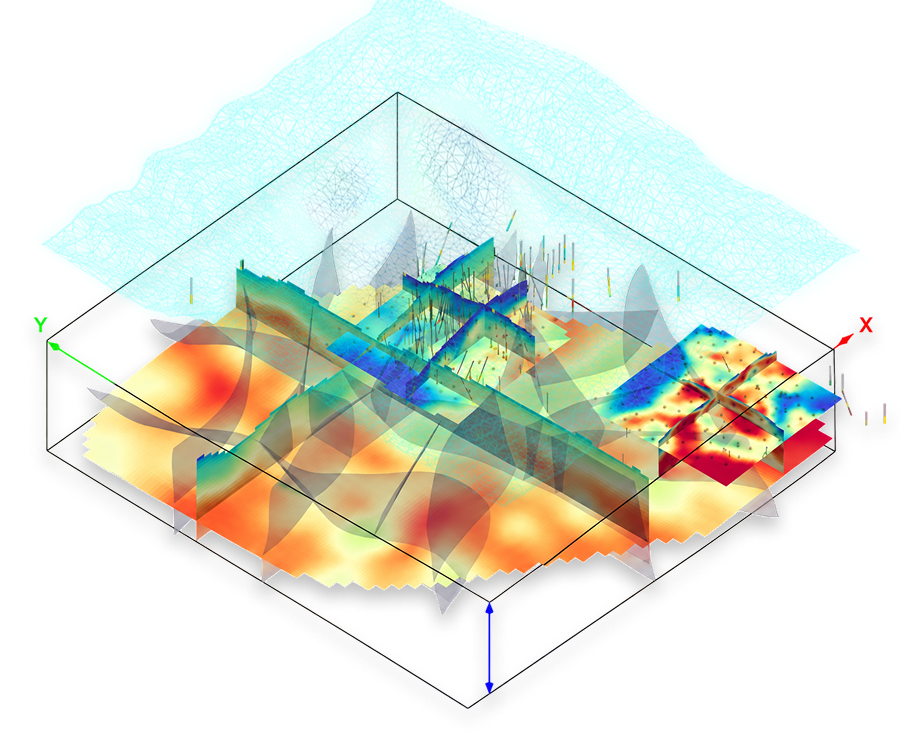
Ambient Noise Tomography, or ANT, uses naturally occurring seismic energy to build depth-resolved 3D shear-wave velocity models of the subsurface, without an active seismic source. It is designed to answer the early structural questions that determine where exploration capital should go: what lies beneath cover, how the major geological domains connect at depth, which structural corridors matter and where the search space should be narrowed.
ANT can be deployed across large areas, then configured at higher density as the exploration quest ion becomes more focused.
Helps teams decide :
Best suited for:
Best suited for:
Active Seismic
High-resolution hard-rock Active Seismic
Resolve the geometry that drilling and resource decisions depend on
Active seismic introduces a controlled source and measures reflected seismic energy from geological boundaries at depth.
Where ANT establishes the broader structural framework, active seismic is used when the decision requires much tighter geometric control. In suitable hard-rock settings, 2D and 3D reflection seismic can resolve faults, contacts, horizons, offsets and deposit-scale structures at high resolution between and beyond drillholes.
It is particularly valuable when a team already knows where the system is, but needs to know exactly how it is shaped, where it continues and where the next hole should go.
Helps teams decide :
Machine Learning
Compounding intelligence hole by hole
Machine learning can find patterns in almost any dataset. That does not mean the patterns are geologically meaningful.
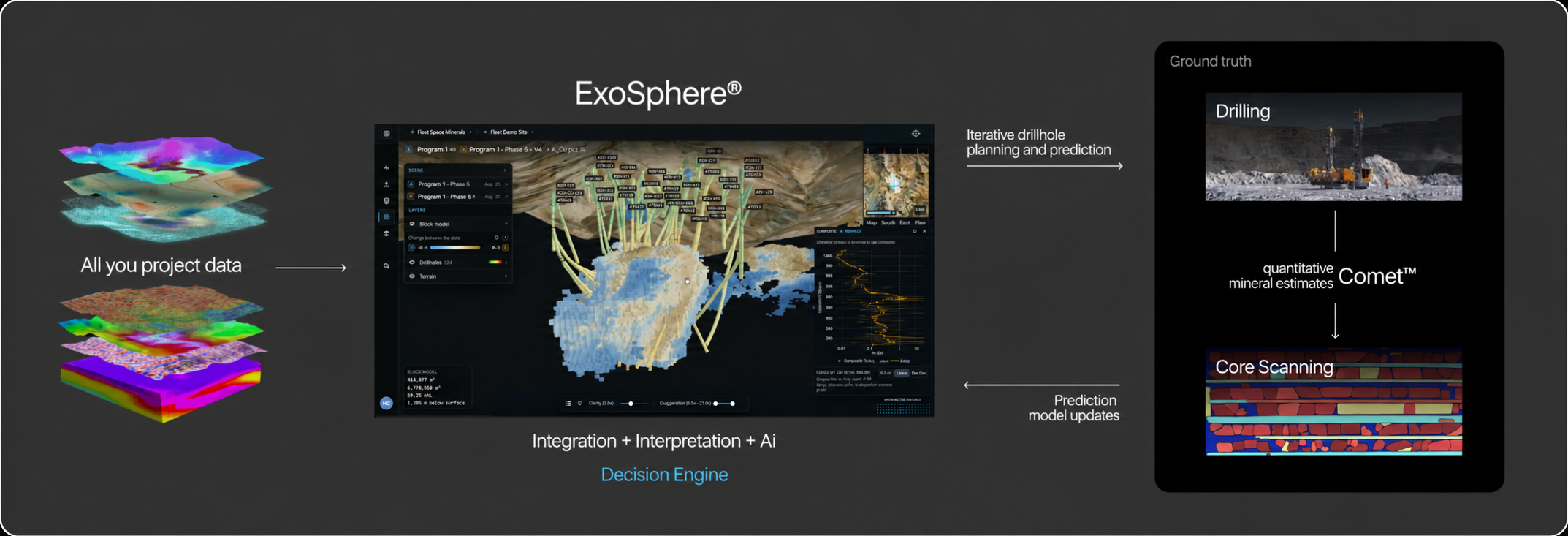
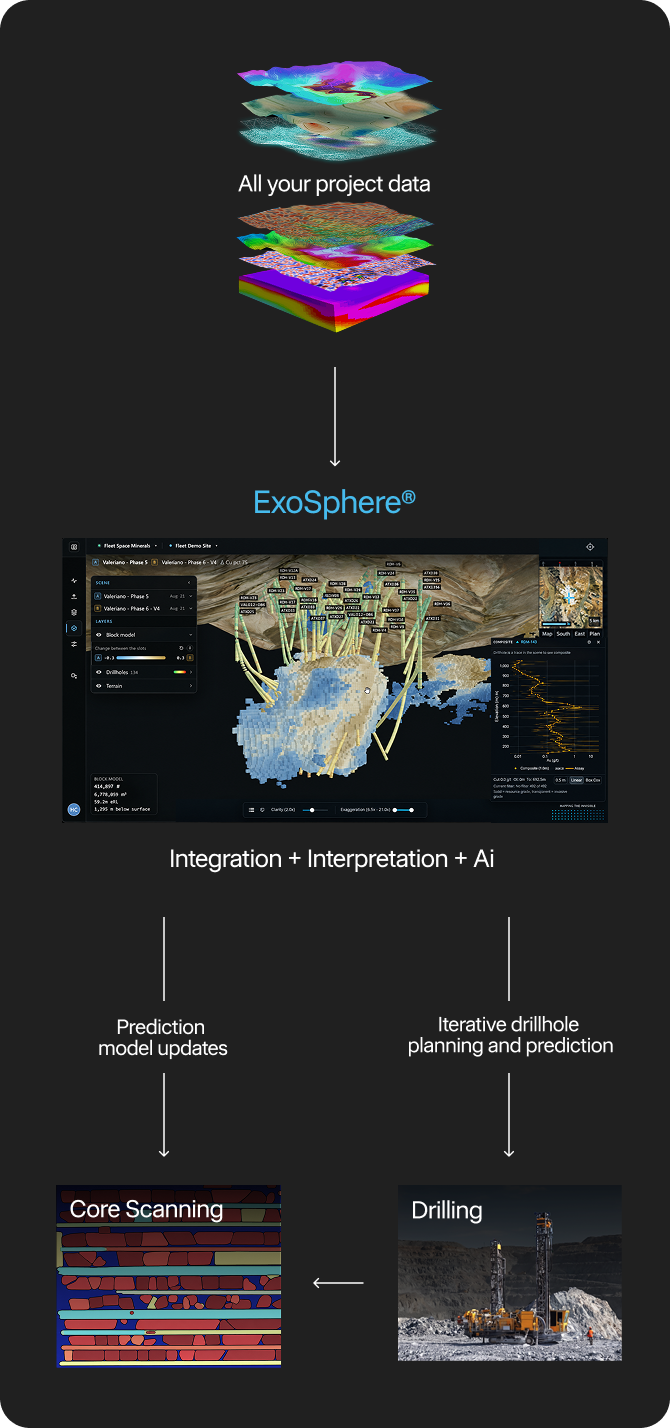
Fleet’s models do not stop at the first prediction. They stay live throughout the life of the program.
As new drilling results, assays and core data arrive, they become ground truth. The model reruns, updating its predictions, quantifying uncertainty, and re-ranking the remaining targets against what the rock has revealed.
Continuously learning
Predictions and confidence update hole-by-hole as new data and ground truth arrive.
Quantified uncertainty
See where predictions are well constrained, where interpretations remain open and where the next evidence matters most.
Predict between and beyond holes
Extend predictions through the 3D volume, not just at the points already drilled.
Traceable to the evidence
Interrogate what drove each prediction , how it changed and how it per formed against actual drilling.
Decision Engine
ExoSphere®
One living 3D environment
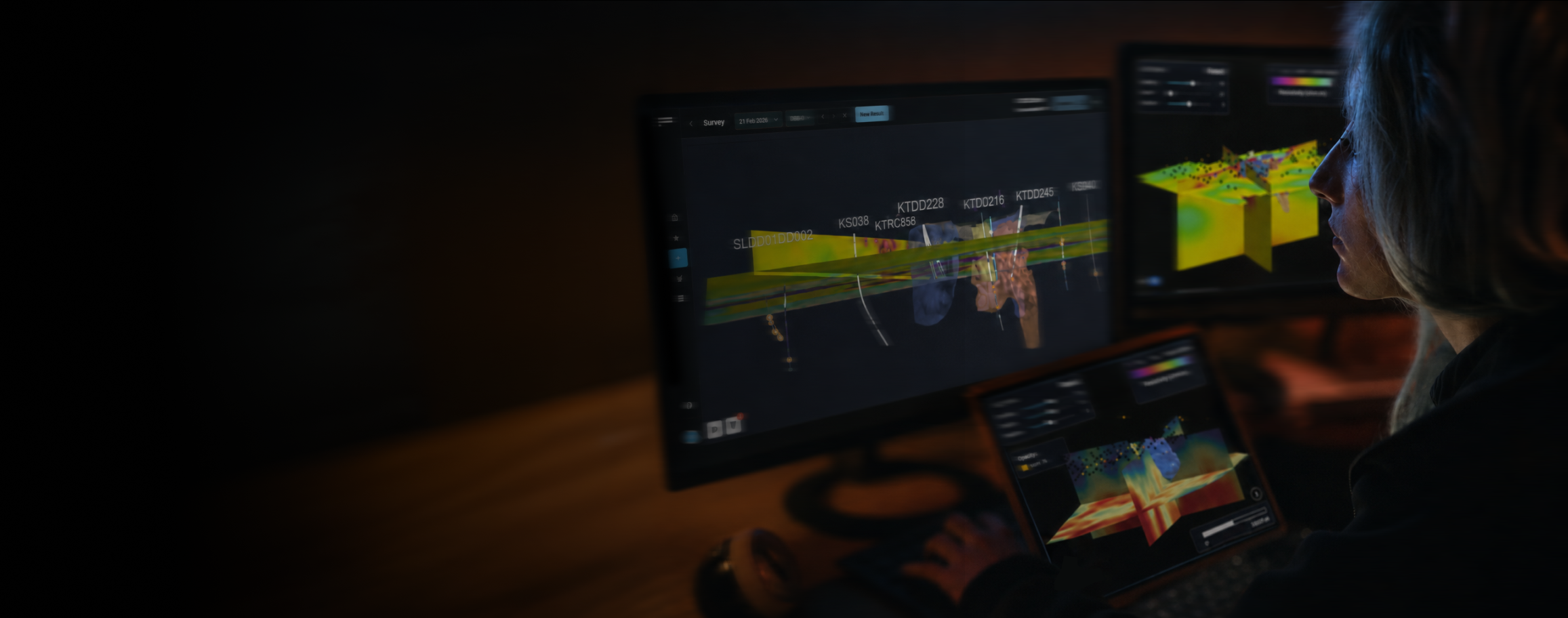
ExoSphere connects the field, the model and the decision.
Acquisition, processing, integrated 3D modelling, interpretation and predictive insights come together in one environment, allowing the subsurface model to evolve in real-time.
Proven in the Field
Structural understanding that changes the next decision

Integrating ANT + MT + Mineralogy + ML to image the high-grade core of Valeriano


Fleet's Real-Time ANT Service Trialled at Northern Star's Kalgoorie Operations


Ambient Noise Tomography for Copper Exploration: Emmie IOCG & Emmie Bluff, SA
FAQs
Frequently Asked Questions
Seismic-led geoscience uses seismic velocity and reflectivity as a structural framework for integrating geology, drilling, geochemistry, mineralogy and complementary geophysical methods into a coherent 3D interpretation of the subsurface. The approach is seismic-led rather than seismic-only. Each dataset provides different evidence, with seismic helping constrain where that evidence sits within the geological architecture.
Seismic methods can be used to image faults, contacts, lithological domains, intrusive architecture, basement geometry and other structural features at depth. The method and survey resolution depend on the geological question, ranging from regional passive seismic imaging to high-resolution active seismic around specific targets or deposits.
Passive seismic methods such as Ambient Noise Tomography use naturally occurring seismic energy to construct velocity models without an active source.
Active seismic introduces a controlled source and records reflected seismic energy, enabling higher-resolution imaging of geological boundaries and structures where suitable acoustic contrasts exist.
Yes, but mineral exploration requires acquisition, processing and interpretation designed specifically for hard-rock environments. Crystalline geology can contain steeply dipping structures, discontinuous reflectors and complex seismic responses that differ substantially from conventional sedimentary oil and gas settings.
No.
Different geophysical methods measure different physical properties. Their value increases when complementary responses can be interpreted together.Seismic provides structural and elastic-property constraints. Gravity provides density information. Magnetics responds to magnetic minerals. MT maps electrical resistivity. IP measures chargeability.Integrated interpretation helps reduce the ambiguity inherent in any single geophysical method.
No.
Drilling remains the ground truth.Seismic helps constrain the geological framework around and between drillholes so drilling can be directed towards specific targets and uncertainties rather than being used primarily to discover the geometry of the system.
Seismic can support decisions from early project generation and target definition through drill testing and resource delineation.The survey design, seismic method and required resolution change with the decision.
Award Winning Technology






Explore with us
Seismic Intelligence with quantified uncertainty